Does the Motivation for Distant Search Stem from Capabilities or Incentives? Evidence from the Wildcatters in the Petroleum Industry

Divya Saxena (Tilburg), Sungyong Chang (Cornell), Sendil Ethiraj (LBS)

Abstract


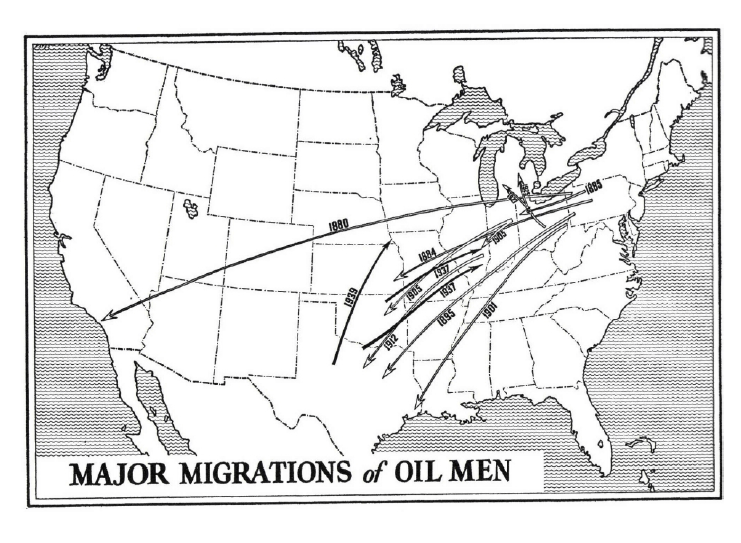
The difficulty of distant search and radical innovation for incumbent firms is a well-accepted assertion in the literature, primarily attributed to cannibalization risk and capability-driven inertia. This study explores the under-theorized role of capabilities in enabling distant search, independent of incentives. We examine the search behavior of firms in the U.S. oil exploration industry from 2008 to 2018, analyzing data from over 940,000 lease lands and drilling outcomes by 25,033 firms. Our findings indicate that, controlling for incentives, firms specializing in distant search are more successful, facing a lower likelihood of drilling dry holes compared to those focusing on local search. We identify key mechanisms underpinning distant search capabilities, including the use of trade secrets and the accumulation of experiential knowledge. Contrary to the notion that only incentives drive distant search, our results highlight the significant role of capabilities. This study contributes to the literature by providing empirical evidence that challenges the conventional understanding of organizational search behavior and by identifying specific capabilities that facilitate distant search, thereby informing managerial strategies and policy decisions to foster innovation.

Keywords: Distant search, Incumbent firms, Incentives view, Capabilities view, Oil Exploration Industry

ARTIFICIAL INTELLIGENCE AND ORGANIZATION MODELING

Sungyong Chang

Under Review at Oxford Bibliographies [invited manuscript]

Abstract/Introduction

Artificial intelligence (AI) has significantly influenced organizational modeling, evolving from the early days of understanding collective intelligence within organizations with bounded rationality to the contemporary use of neural networks and deep learning. Tracing its roots back to Herbert Simon’s work on administrative behavior and complex adaptive systems, AI’s journey in organizational studies has shifted from a focus on explicit decision rules to connectionist approaches akin to neural networks. This transformation is highlighted by the rise of computational power and extensive digital datasets, enabling advanced deep learning systems. However, the application of these AI advancements in organizational design remains in its nascent stages. The potential of AI as a tool and metaphor for organizational design raises crucial questions about its role in framing human decision-making and the challenges of integrating atheoretical AI systems with human cognition.

Reexamination of Ownership Structure and R&D Investment in Family Businesses: Evidence from Korean Business Groups

Reexamination of Ownership Structure and R&D Investment in Family Businesses: Evidence and Insights from Korean Business Groups

Abstract

The study reexamines the family ownership and overall firms’ ownership structure on R&D investment, as these vary significantly between companies. Both variables are endogenous, necessitating an analysis that accounts for this endogeneity. The findings indicate that the impact of professional management shareholding on R&D investment is not significant, and vice versa. It reveals a tendency for R&D investment to decrease as the family owner’s shareholding increases, and firms with higher R&D investments tend to have lower owner shareholdings. The passage also notes that empirical research results often conflict, and this study highlights that differences in econometric methods could contribute to these conflicting results.

Keywords:

Key Word: Family Business, Ownership Structure, Family Ownership, R&D Investment, Instrumental variable analysis, Hausman & Taylor IV/GLS

Role of Latecomers’ Imitation in Overtaking Industry Leaders: A Resource Allocation and Building Perspective

Role of latecomers’ imitation in overtaking industry leaders: A resource allocation and building perspective [Link to SSRN]

Abstract

Since Schumpeter emphasized the importance of innovation for latecomers to leapfrog and overtake industry leaders, strategy research has viewed innovation as the primary impetus for leadership change. On the other hand, imitation in this literature has been portrayed as a strategy by which a latecomer can narrow the gap with, but not surpass, leaders. Thus far, little research has examined whether imitation can help latecomers with disadvantageous positions catch up with and eventually overtake leaders. By employing a computational model, we find that latecomers who pursue innovation alone are unlikely to overtake leaders, whereas latecomers who mix innovation and imitation are more likely to do so. When the latecomer allocates all its R&D budget to innovative R&D, it is likely to run out of capital quickly and be unable to continue to invest in R&D. A mix of innovation and imitation better maintains a steady cash stream, helping the latecomer continue to invest in R&D and thereby leaving room for leapfrogging opportunities.

Keywords: Schumpeterian competition, imitation, innovation, technological leadership change, difficulty of innovation

Industry Cyclicality and Entrepreneurial Firms’ Resource Allocation Strategy: Evidence from the DRAM Industry 2005-2014

Industry Cyclicality and entrepreneurial firms’ resource allocation strategy: Evidence from the DRAM industry 2005-2014

[AOM Proceedings Version]

Abstract

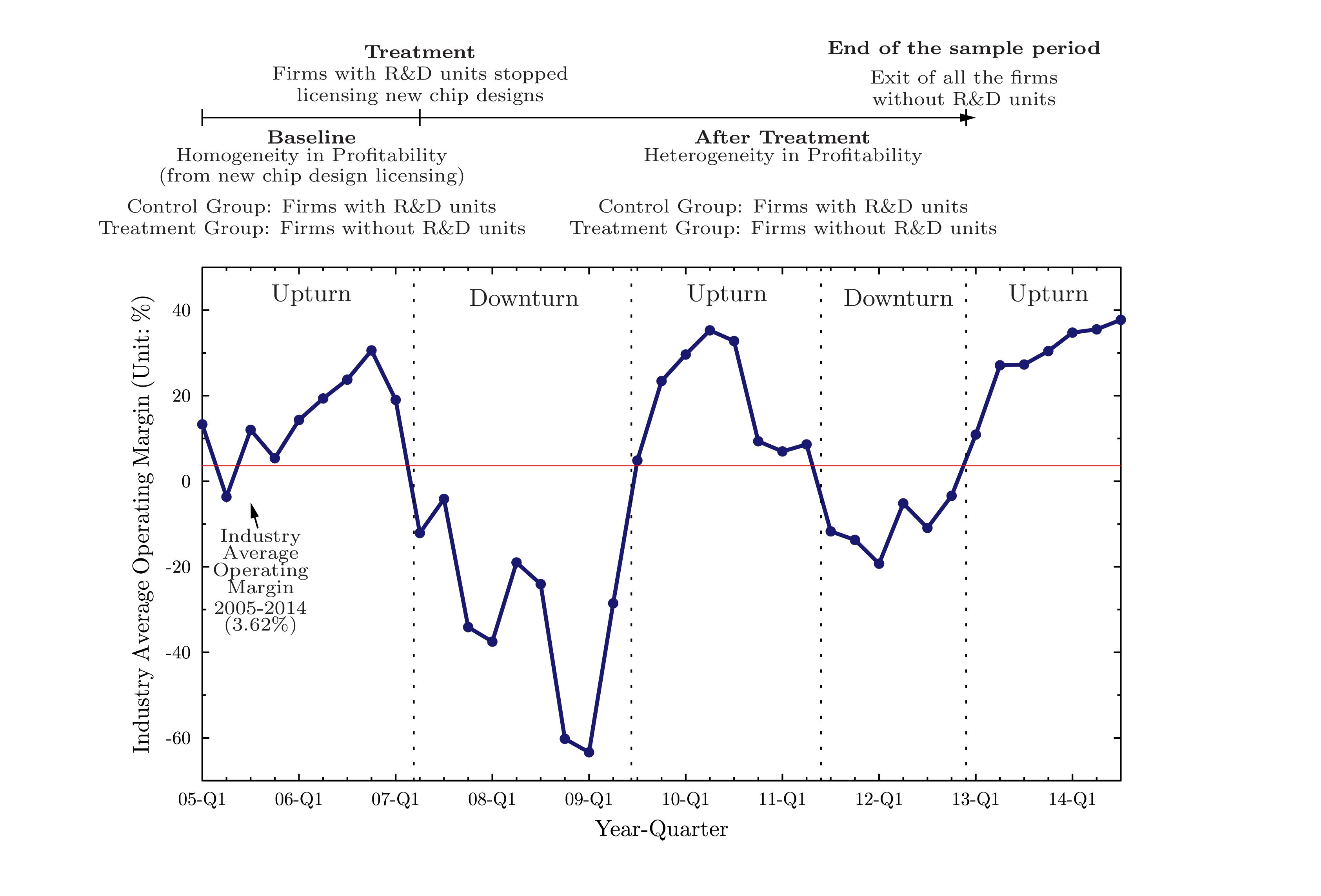
Does toolkit license from incumbents facilitate the survival and growth of the latecomers? We argue that if industry cyclicality exists, toolkit licensing is detrimental to the survival of latecomers as well as low-performing incumbents. The DRAM industry, which is known as a cyclical industry, offers an unusual setting to test these competing hypotheses. During the period 2005-2014, Taiwanese companies experimented with a new business model, the DRAM foundry without an R&D unit. Since all these companies could not license new chip designs during the 2007-2009 downturn of the silicon cycle, we examine how an exogenous reduction of R\&D units during this period influenced firm-level performance. Using all the DRAM manufacturers’ profitability and technology data from iSuppli, DRAMExchange, and SEMI databases, we find that during a downturn, the void of the R&D units led to dramatically low profitability (-84%), which came from low systemic innovation which bridges product innovation and process innovation. The results highlight that the importance of product innovation may not decrease in a fast-changing technological environment.

Keyword: Schumpeterian competition, resource allocation, toolkit licensing, industry cyclicality, DRAM industry

2015-06-25-figure1_cycle

The Impact of Decomposability on Organizational Hierarchy in Entrepreneurial Firms: Evidence from the Game Engine and Video Game Industry 1990-2019

The Impact of Decomposability on Organizational Hierarchy: Evidence from the Game Engine and Video Game Industry 1990-2019

Abstract

We observe a growing number of software development kits (SDKs) are externally available. We explore how using externally available SDKs affects the product innovation process. We characterize (1) product development by using externally available SDKs as solving nearly modular problems and (2) product development by building inhouse SDKs as solving an integral problem (i.e., relatively non-modular). We explore the video game industry, in which software development kits are called game engines, and game developers explore theme innovations (i.e., non-technological dimension) as well as technological innovations. Findings suggest that on average, using commercial game engines facilitates module-level innovations but less likely to introduce system-level innovations which require a cross-module coordination. Also, the number of commercial game engine users is an important predictor of product innovation. If when the number of users is not sufficiently large, its weakness in system-level innovations exacerbated, and the strength in module innovation is also weaker, showing that harnessing the power of positive feedback (i.e., ecosystem effect) between the number of users and the quality of engines matters.

Keywords: Decomposability, Organizational Hierarchy, Software Development Kits, Product Innovation

Technological Opportunity and Technological Leadership Change

Technological opportunity, technological leadership change, and the latecomer’ R&D resource allocation between innovation and imitation

Abstract

This study examines when and how latecomers can surpass incumbents in technological capabilities with a focus on the role of technological opportunity. There is a disagreement in theoretical prediction and evidence on whether technological opportunity is conducive to the change of technological leadership. To reconcile this disagreement, we build a computational model on Schumpeterian competition in which incumbents and latecomers compete with innovation and imitation R&D. First, results suggest that technological opportunity indeed has the two opposing effects (i.e., positive and negative) on technological leadership change, and these effects create an inverted-U relationship. When there are few opportunities, leadership change is unlikely to happen because latecomers will hardly come up with a breakthrough. Also, abundant opportunities may not be conducive to leadership change either because incumbents move forward faster than latecomers. We further examine why these opposing effects exist by exploring latecomers’ R&D allocation between innovation and imitation. Results highlight that imitation R&D is a necessary condition for latecomers to leverage technological opportunity (i.e., enabling the positive effect of technological opportunity) and overcome their disadvantages under technologically munificent environment (i.e., mitigating the negative effect of technological opportunity).

Keyword: Schumpeterian competition, Technological opportunity, Technological leadership change, Imitation, Innovation

Two Faces of Decomposability in Search: Evidence from the Recorded Music Industry 1995-2015

Two Faces of Decomposability in Search:
Evidence from the Recorded Music Industry 1995-2015

Abstract

We propose that decomposability may generate a trade-off across different stages of search. We compare (1) decomposed search, the process of searching by producing a decomposed module, and (2) integrated search, the process of searching by producing a full-scale product. In the variation generation stage, decomposability can allow firms to experiment with more alternatives at the same time than an integrated search. However, in the selection and retention stages, a decomposed search may be more vulnerable to imperfect evaluation than an integrated search. It may increase the chance of missing out on promising alternatives after the first evaluation because the low cost of a decomposed search makes firms less committed to each alternative. We test our theory with a unique empirical setting, the recorded music industry, where singles (i.e., decomposed products) and albums (i.e., integrated products) have coexisted since the early twentieth century. In the variation generation stage, single-producing firms experiment with 35.22% more new artists than album-only-producing firms. In the selection and retention stage, single-producing firms are 69.57% more likely to neglect top-tier artists who failed in their first releases because single-producing firms have a higher performance target (i.e., lower commitment) than album-only-producing firms.

Keywords: Decomposability, Evolutionary Perspective on Search, Behavioral Theory of the Firm, Alternative Evaluation


Growth Logics: Market vs. Technological Relatedness in Product Entry

Growth Logics: Market vs. Technological Relatedness and the Direction of Organizational Growth

Sungyong Chang,            J.P. Eggers, and Daniel Keum
Columbia Business School         NYU Stern School of Business

[ SSRN Working Paper Version]

Abstract

How do technological and market knowledge drive organizational expansion decisions? Extending research on knowledge, resources, and organizational growth, we suggest that the relatedness of the firm’s market resources and knowledge to a potential market for entry will better predict entry behavior than technological relatedness. Using cross-industry data with granular product entry information covering over 2,681 product segments, we find robust evidence that market relatedness is an independent and significant predictor of product market entry, while technological relatedness does not predict entry. Due to the valuable but non-tradable nature of market resources, firms must enter new markets to capture that value, while firms can capture the value of technological resources without entry. These findings contribute to ongoing discussions about the directions of organizational growth within the Resource Based View of the firm and the role that markets for technology are playing in reshaping organizational boundaries.


Key words: firm knowledge; product market entry; diversification; resource-based view; markets for technology


Figure 1. Histogram of Technological Relatedness
between Firms and Product Categories

tech_rel_distribution2


Global Diversification Discount and Its Discontent

Global Diversification Discount and Its Discontents:
A Bit of Self-selection Makes a World of Difference

Sungyong Chang, Bruce Kogut, and Jae-Suk Yang

Columbia Business School, Columbia University

Forthcoming, Strategic Management Journal

[SSRN Accepted Paper Version]

Abstract

The documented discount on globally diversified firms is often cited, but a correlation is not per se evidence that global diversification destroys firm value. Firms choose to globally diversify based on their firm attributes, some of which may be unobservable. Given these exogenous firm attributes, the decision to diversify globally is endogenous and self-selected. Using the same specifications save for the Heckman selection instrument, our results contradict past research that did not address endogeneity. We posit that the global premium should reflect the value of multinational operating flexibility. We use the 2008-2009 financial crisis as creating exogenous variation to permit a test for the positive change in firm valuation due to global diversification. During and after the 2008-2009 financial crisis, the premium associated with global diversification became larger and more significant than before the 2008-2009 financial crisis. The churn of subsidiaries entering and exiting countries increased during the crisis, pointing to the value of an operating flexibility to restructure the geography of the multinational network. In all, the results contradict past findings and finds evidence that operating flexibility is more valued during times of high volatility, thus generating the diversification premium.

Keywords: Global diversification; Self-selection; Operating flexibility; Financial crisis

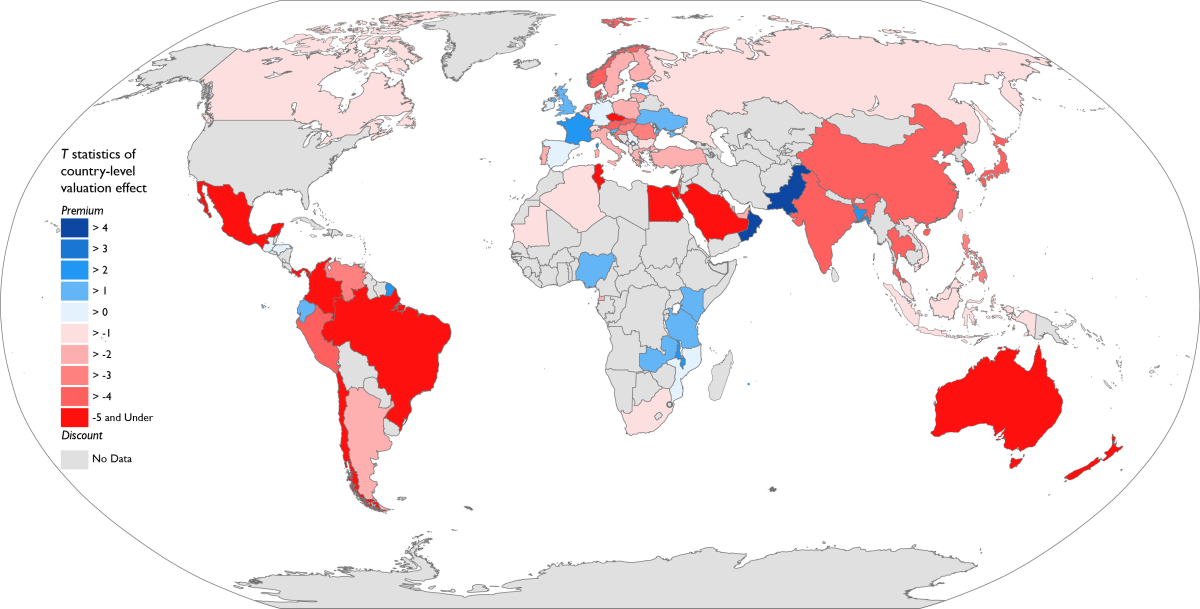
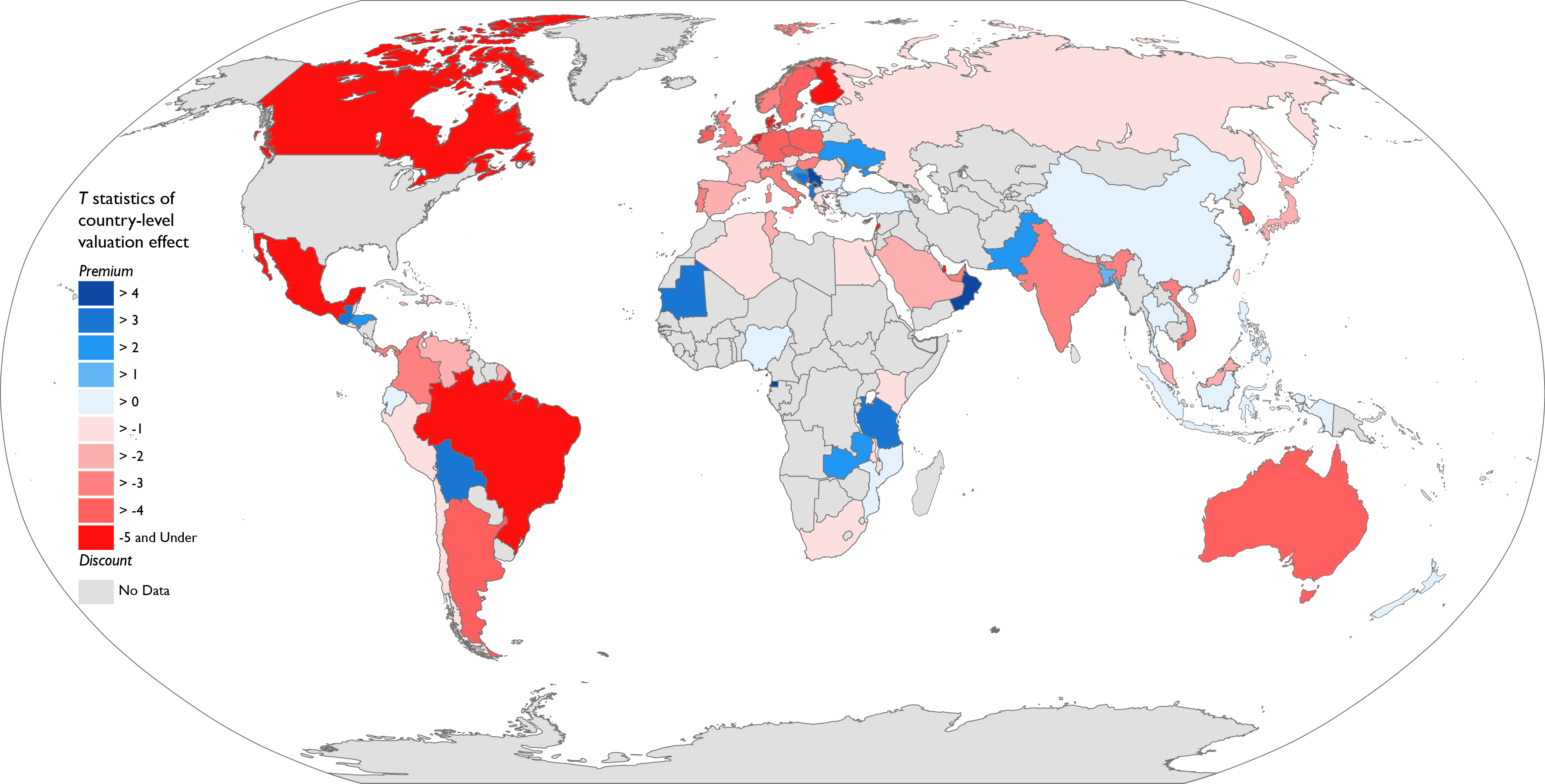
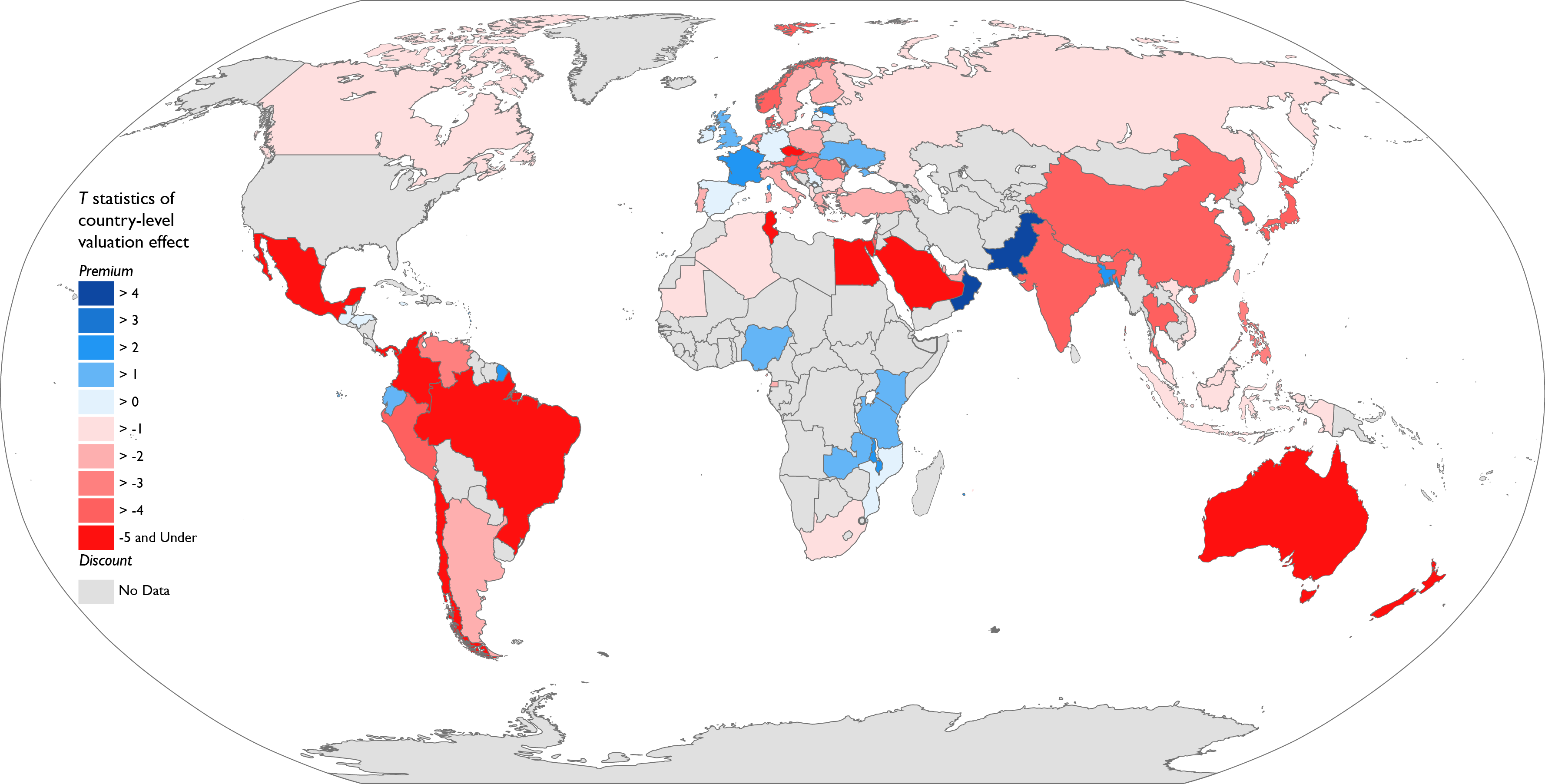
Figure 3.  Country-level Valuation Effect of Global Diversification

Panel A. With Controlling Self-selection

2015-12-27-noheckman_border

Panel B. With Controlling Self-selection

2015-12-27-heckman_border

Note: Color shows t-values. (Blue-Premium; Red-Discount, Grey-No data)