
Sungyong Chang
Under Review at Oxford Bibliographies [invited manuscript]
Abstract/Introduction
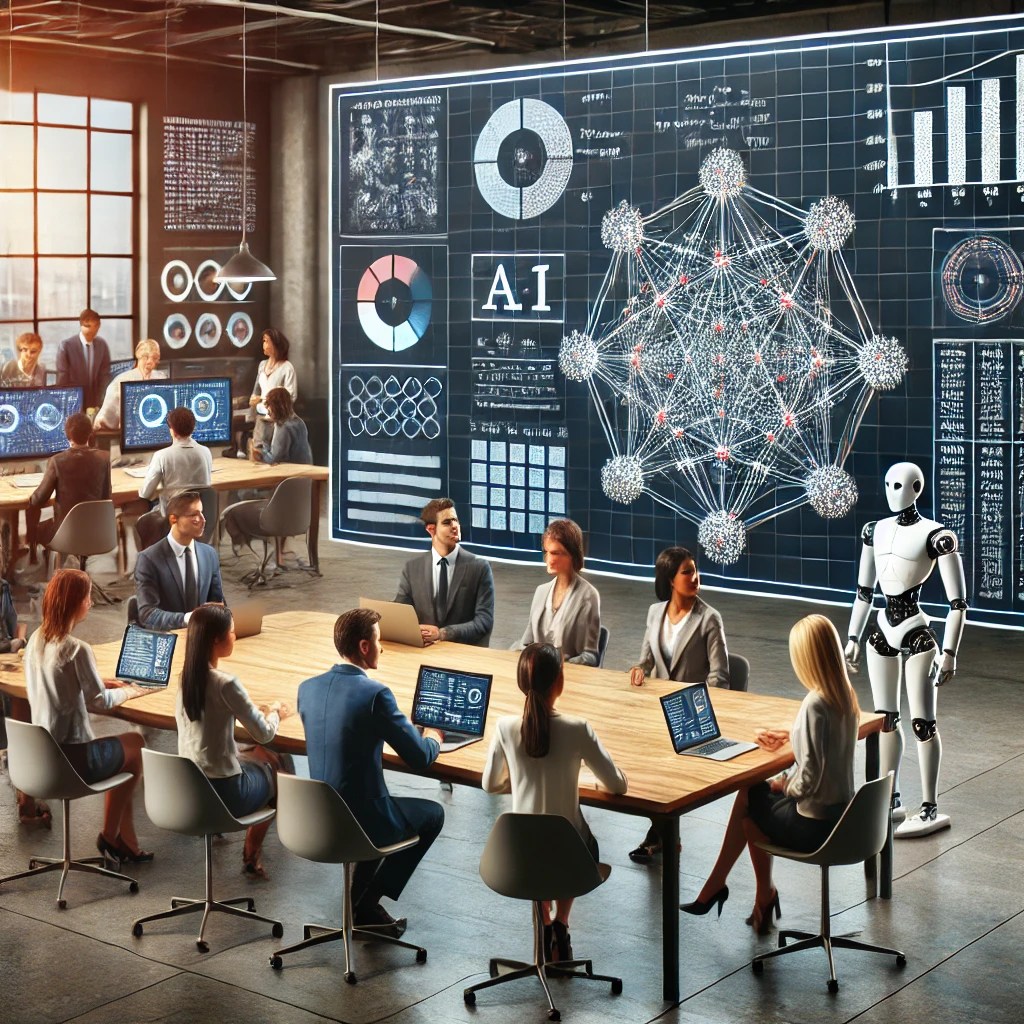
Artificial intelligence (AI) has significantly influenced organizational modeling, evolving from the early days of understanding collective intelligence within organizations with bounded rationality to the contemporary use of neural networks and deep learning. Tracing its roots back to Herbert Simon’s work on administrative behavior and complex adaptive systems, AI’s journey in organizational studies has shifted from a focus on explicit decision rules to connectionist approaches akin to neural networks. This transformation is highlighted by the rise of computational power and extensive digital datasets, enabling advanced deep learning systems. However, the application of these AI advancements in organizational design remains in its nascent stages. The potential of AI as a tool and metaphor for organizational design raises crucial questions about its role in framing human decision-making and the challenges of integrating atheoretical AI systems with human cognition.

 Sungyong Chang